Restoring Clear Vision: Advanced Cataract Surgery
Cataracts are the leading cause of treatable blindness. We provide stitch-free Phacoemulsification surgery with premium intraocular lens (IOL) implants.
Cataract Overview
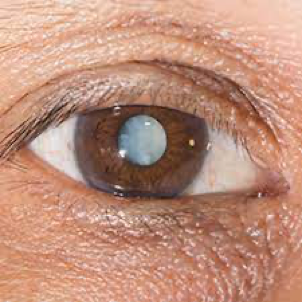
A cataract is a naturally occurring “clouding” or “yellowing” of the natural lens inside the eye. For people who have cataracts, seeing through cloudy lenses is a bit like looking through a frosty or fogged-up window, making daily activities like reading, driving, or recognizing faces difficult.
Cataracts are extremely common, developing gradually as a normal part of aging. While development often starts in a person's 40s or 50s, symptoms typically become noticeable and interfere with vision by age 60 to 70. In India, cataract blindness accounts for 80.1% of all blindness cases, presenting a significant health and economic burden.
Common Cataract Symptoms
- Cloudy, blurry, or dim vision that cannot be corrected with glasses.
- Increasing difficulty with vision at night (requiring brighter light for reading).
- Sensitivity to light and glare, or seeing “halos” around lights.
- Fading or yellowing of colors, and frequent changes in eyeglass prescriptions.
Treatment for Cataract
The only effective treatment for a cataract is the surgical removal of the cloudy natural lens and replacing it with a clear, biocompatible artificial lens called an **Intraocular Lens (IOL)**. At Sankar Foundation, we offer state-of-the-art surgical options:
Phacoemulsification (Phaco)
A modern, micro-incision stitch-free technique. High-frequency ultrasound waves are used to break the cataract into tiny pieces, which are gently vacuumed out, and a foldable IOL is inserted.
Premium IOL Implants
We offer a range of premium IOL options including Monofocal, Toric (astigmatism-correcting), and Multifocal/Extended Depth of Focus (EDOF) lenses to reduce dependence on reading glasses.
Surgical Process & Pathway
Evaluation & Biometry
Detailed ophthalmic examination, visual profiling, and advanced biometry scans to calculate custom IOL power.
Micro-Incision Surgery
A stitch-free, painless procedure performed under topical drop anesthesia, taking about 15 to 20 minutes.
Same-Day Recovery
No overnight stay required. The patient goes home the same day with simple post-operative instructions.
Frequently Asked Questions
Is cataract surgery painful?+
No. The procedure is performed under local drop anesthesia (topical drops) to completely numb the eye. Patients typically feel no pain, only a light touch or water sensation during the short surgery.
How long is the recovery period?+
With stitch-free Phacoemulsification, visual recovery is very fast. Most patients return to light daily activities within 24 to 48 hours. Complete healing takes about 4 to 6 weeks, after which final glasses are prescribed.
Can cataracts return after surgery?+
No. Once a cataract is removed, it cannot return because the natural lens is replaced by an artificial plastic IOL. However, some patients may develop a cloudy film behind the new lens (Posterior Capsule Opacification) months or years later, which is easily cleared in minutes with a quick, painless YAG Laser clinic procedure.
What is the difference between Monofocal and Multifocal IOLs?+
Monofocal IOLs provide excellent vision at a single distance (usually distance vision), meaning reading glasses will still be needed. Multifocal/EDOF lenses split light to provide vision at multiple distances (distance, intermediate, and near), significantly reducing or eliminating the need for glasses altogether.