Pediatric Ophthalmology: Specialized Care for Young Eyes
Examining and treating children requires special clinical skills, pediatric equipment, and a warm, patient approach to protect young vision.
Specialized Eye Care for Children
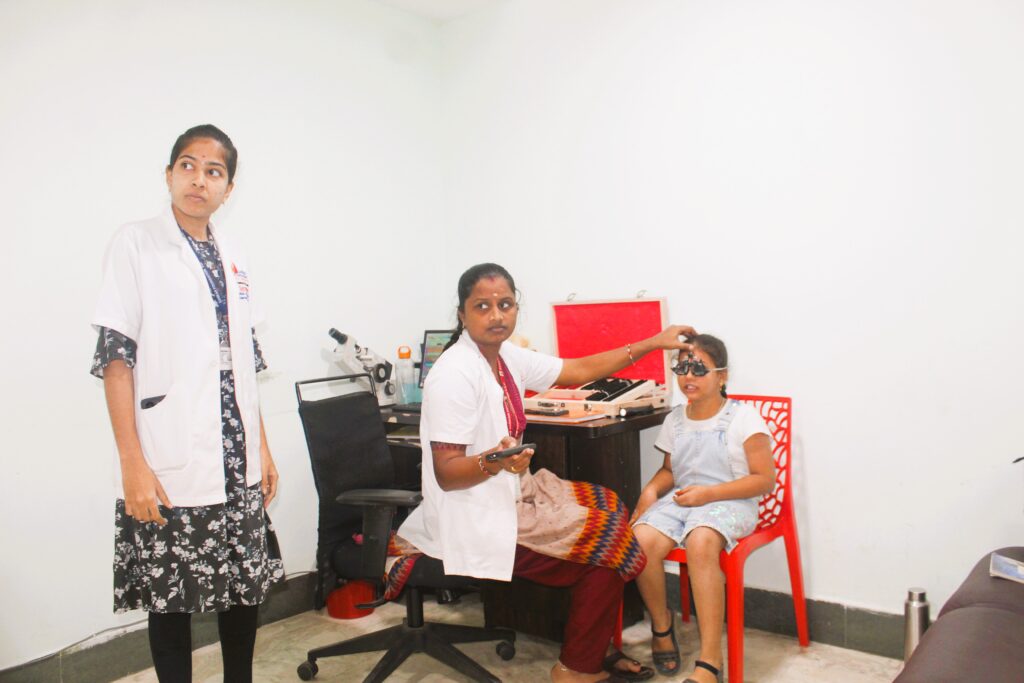
Examining and treating children requires specialized skills and calls for specific training, knowledge, and equipment. Because children's visual systems are still developing, early diagnosis and treatment of childhood eye disorders are critical to prevent permanent vision impairment. At Sankar Foundation Eye Hospital, we have a dedicated pediatric department with trained staff and child-friendly diagnostic tools.
We focus on making eye checks comfortable, engaging, and stress-free for infants, toddlers, and school-aged children. Early detection of issues like squint or high refractive error can completely change a child's educational and visual future.
Children's Eye Concerns
Refractive error is the most common eye problem found among children. It occurs when the eye cannot focus images clearly on the retina, causing blurriness.
Common Pediatric Eye Conditions
Squint (Strabismus)
A misalignment of the eyes where they do not look in the same direction. Can be corrected with glasses, patching therapy, or surgical realignment to restore binocular vision.
Lazy Eye (Amblyopia)
Reduced vision in one eye because the brain favors the other eye during early childhood development. Treated effectively using patching therapy or specialized glasses.
Childhood Cataract
A rare condition where a baby is born with a cloudy lens (congenital) or develops it in infancy. Requires prompt surgical intervention to allow normal visual pathways to develop.
Blocked Tear Ducts (Watering Eyes)
A common condition in infants where the tear drainage system is partially blocked, leading to constant watering and crusting. Managed with massage or minor probing.
Pediatric Clinical Services
Sankar Foundation offers dedicated therapeutic programs and minor surgical corrections for pediatric patients:
Vision Assessment
Specialized pediatric charts, symbol matching, and objective retinoscopy for infants and non-verbal children.
Patching & Amblyopia
Structured occlusion (patching) therapy and visual exercises to strengthen lazy eyes.
Squint Correction
Expert surgical corrections for horizontal and vertical squints, improving alignment and appearance.
Frequently Asked Questions
At what age should a child have their first eye test?+
A child should have their first visual assessment by age 3 to 4. However, if parents notice any signs of squint, constant watering, white reflex in the pupil, or struggling to track objects, they should consult a pediatric ophthalmologist immediately, even in infancy.
Can a squint in a child correct itself as they grow?+
No. A squint (strabismus) does not correct itself. If left untreated, the brain will ignore images from the misaligned eye, leading to a permanent drop in vision (Amblyopia or Lazy Eye). Early intervention with glasses, patching, or surgery is essential.
What is Lazy Eye (Amblyopia) and how is it treated?+
Lazy Eye is a condition where one eye does not develop normal visual acuity during childhood, usually because of a squint or an unequal prescription between the eyes. It is treated by patching the 'good' eye for several hours a day to force the brain to use and strengthen the weaker eye.
Does excessive screen time cause myopia (nearsightedness)?+
Yes, prolonged near-vision work such as looking at phones or tablets, combined with a lack of outdoor play in natural sunlight, is heavily associated with the development and progression of myopia (nearsightedness) in children. We advise limiting screens and encouraging outdoor play.