

Glaucoma Care: Protecting Your Optic Nerve
Often called the 'silent thief of sight', glaucoma causes irreversible vision loss without early symptoms. We provide advanced diagnostic screenings and medical treatments.
What is Glaucoma?
Glaucoma is the second leading cause of irreversible blindness worldwide. It is the name given to a group of eye diseases where vision loss occurs due to progressive damage to the optic nerve, which connects the eye to the brain. Glaucoma is famously termed the **“silent thief of sight”** because the most common form, primary open-angle glaucoma, develops painlessly and gradually without noticeable symptoms until permanent vision loss has occurred.
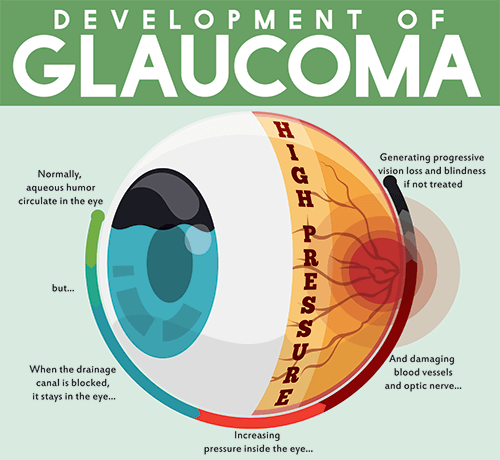
The primary risk factor for glaucoma is elevated **intraocular pressure (IOP)**. Our eyes produce a fluid called aqueous humor for nourishment. Normally, this fluid drains out through a mesh-like channel. If these drainage canals become blocked or deposits build up, the fluid cannot exit, causing pressure inside the eye to rise. This pressure compresses and damages the delicate nerve fibers of the optic nerve.
How Glaucoma Damages Vision
As the optic nerve is damaged, blind spots develop, usually starting in the peripheral (side) vision. Over time, if left untreated, this peripheral vision loss narrows until only central “tunnel vision” remains, eventually leading to complete blindness.
Types of Glaucoma
Open-Angle Glaucoma
The most common form. The drainage angle remains open but the microscopic drainage channels slowly clog over time, leading to gradual pressure increase.
Angle-Closure Glaucoma
Occurs when the iris bulges forward, narrowing or completely blocking the drainage angle. Can cause a sudden, painful pressure spike requiring emergency care.
Secondary Glaucoma
Results from another medical condition or eye issue, such as trauma, severe diabetes, eye tumors, inflammation, or advanced cataract complications.
Diagnosis & Treatment
Although glaucoma damage cannot be reversed, treatments can prevent further vision loss by lowering eye pressure. For diagnosis and treatment, we have an experienced team of specialists and the latest technology:
Advanced Diagnostics
We utilize Non-Contact Tonometry (pressure testing), Humphrey Visual Field Analyzer (HFA) for peripheral check, and high-definition OCT scans of the optic nerve head.
Medical Management
Most open-angle glaucoma is managed effectively using daily prescription eye drops that either reduce fluid production or improve drainage.
SLT Laser Treatment
Selective Laser Trabeculoplasty (SLT) is a quick, safe, in-clinic laser procedure to open drainage channels and lower IOP without surgery.
Surgical Trabeculectomy
For advanced cases, our surgeons perform filtering surgeries (trabeculectomy) to create a new drainage pathway for the fluid.
Frequently Asked Questions
Can glaucoma be cured or vision restored?+
No. Vision loss caused by glaucoma damage to the optic nerve is permanent and cannot be restored. However, with early detection and correct treatment (eye drops, laser, or surgery), intraocular pressure can be stabilized to prevent any further vision loss.
How often should I get tested for glaucoma?+
For general adults, a checkup every 2 years is advised. If you are over 40, have diabetes, high myopia, or a family history of glaucoma, you should undergo a comprehensive screening every year.
What is a Visual Field Test?+
It is a specialized diagnostic test where you look into a bowl-shaped instrument and click a button when you notice faint lights flashing in your peripheral vision. It maps your field of vision to detect if glaucoma has created blind spots.
Does high eye pressure always mean I have glaucoma?+
Not necessarily. Some people have high eye pressure without developing nerve damage (Ocular Hypertension), while others develop glaucoma damage even with normal pressure (Normal-Tension Glaucoma). A full evaluation by a specialist is required to make a diagnosis.